.svg)

In the early days of digital signage, Google ChromeOS seemed like the ideal choice for businesses looking to deploy and manage their digital displays.
In the early days of digital signage, Google ChromeOS seemed like the ideal choice for businesses looking to deploy and manage their digital displays.
While ChromeOS brought simplicity to the industry, Android has since emerged as an even more flexible and cost-effective alternative.
In this blog post, we’ll explore why ChromeOS was initially attractive for digital signage and how Android has surpassed it in terms of flexibility, scalability, and affordability.
The Initial Appeal of Google ChromeOS for Digital Signage
ChromeOS is a lightweight operating system developed by Google, primarily designed for use on Chromebook laptops and other devices.
Based on the Linux kernel, ChromeOS is centered around the Google Chrome web browser, providing users with a fast, secure, and simple experience.
The operating system relies on web-based applications and cloud storage, making it an ideal choice for users who primarily work online and require minimal local storage.
ChromeOS was initially seen as a promising option for digital signage due to its ease of use, light footprint, and ability to automatically update.
Businesses appreciated the straightforward setup process, and ChromeOS devices offered a high level of security and stability.
The Limitations of ChromeOS in the Digital Signage Industry
Despite its initial appeal, ChromeOS has some limitations when it comes to digital signage:
- Limited app ecosystem:
ChromeOS relies on web-based applications, which can be restrictive compared to Android's vast selection of native apps available through the Google Play Store. - Hardware constraints:
ChromeOS devices tend to be more expensive than their Android counterparts, which can increase the overall cost of deploying digital signage systems. - Lack of customization:
ChromeOS devices offer limited customization options, making it challenging for businesses to tailor their digital signage experience to their specific needs.
The Rise of Android: Flexibility and Lower Costs
Android, Google’s other operating system, has since emerged as a more appealing option for digital signage thanks to its flexibility and affordability.
Here are some key reasons why Android is outshining ChromeOS in the digital signage market:
- Expansive app ecosystem:
Android boasts a vast array of apps available through the Google Play Store, enabling businesses to choose from a wide selection of digital signage applications tailored for Android devices. - Cost-effective hardware:
Android devices are generally more affordable than ChromeOS devices, making them an attractive option for businesses looking to deploy digital signage systems without breaking the bank. - Customization options:
Android offers extensive customization capabilities, allowing businesses to create bespoke digital signage experiences that cater to their unique requirements. - Scalability:
Android's open-source nature allows for easier scaling of digital signage systems, enabling businesses to expand their reach and engage with more customers without substantial upfront costs.
Some Android History
Android is an open-source operating system primarily designed for smartphones and tablets, which has since been adapted for various devices, including smart TVs, wearables, automotive systems, and yes, digital signage!
The development of Android began in 2003 by Android Inc., a company co-founded by Andy Rubin, Rich Miner, Nick Sears, and Chris White.
The primary goal was to create an advanced operating system for digital cameras, but the focus later shifted to mobile devices.
In 2005, Google acquired Android Inc. and started developing the Android platform with the backing of the Open Handset Alliance, a consortium of technology companies that aimed to accelerate innovation in the mobile industry.
The first public release of Android, version 1.0, came in September 2008 alongside the launch of the HTC Dream, the first commercially available smartphone running Android.
Over the years, Android has evolved through numerous major updates, each named after a dessert or sweet treat in alphabetical order, a tradition that lasted until Android 10.
Today, Android is the most widely used mobile operating system globally, powering billions of devices across various manufacturers.
Embracing the Android Revolution in Digital Signage
As the digital signage industry continues to evolve, businesses increasingly recognize the benefits of Android-based players over ChromeOS.
By embracing Android, organizations can enjoy greater flexibility and lower costs while still benefiting from the security and stability offered by Google’s ecosystem.
While Google ChromeOS initially seemed like a promising option for digital signage, Android has since emerged as a superior alternative due to its flexibility and affordability.
As businesses look to deploy and manage digital signage systems that cater to their unique needs, Android’s expansive app ecosystem, cost-effective hardware, and extensive customization options make it the ideal choice.
The digital signage industry is evolving, and Android is paving the way for a more adaptable and cost-effective future.
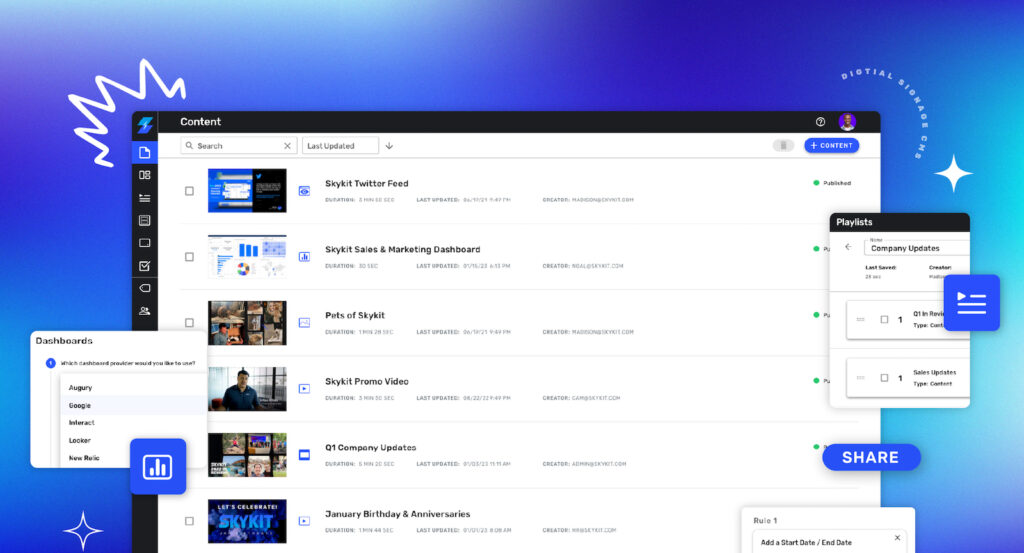
Connect with an Android digital signage expert and see Skykit’s easy-to-use and affordable content management system today.











.svg)


