.svg)
Looking back at 2025, it’s clear this was a watershed year for enterprise digital signage. The industry didn’t just grow – it matured. Increasingly, organizations stopped treating screens as nice-to-have communication tools and started viewing them as critical business infrastructure that:
- Drives Revenue
- Powers Real-Time Decisions
- Operates at Scale
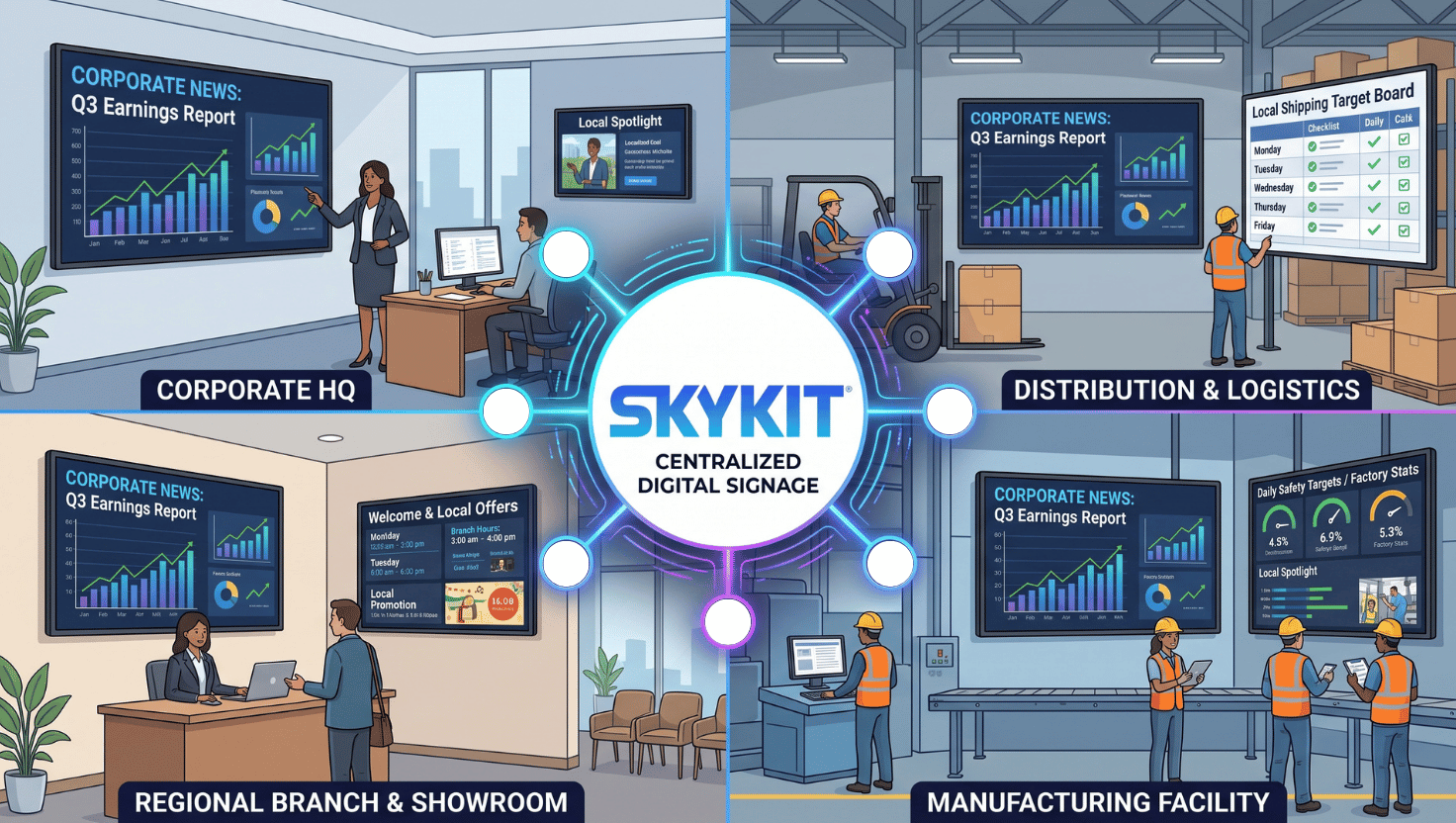
At Skykit, we’ve had front-row seats to this transformation. We’ve watched Fortune 500 companies shift from pilot projects to full-scale deployments. We saw buyer conversations evolve from feature comparisons to strategic discussions about ROI, platform architecture, and long-term scalability. And we have continued to validate that our full-stack approach (controlling hardware, firmware, edge software, and cloud platform) solves the real problems enterprises face.
As we close out the year, here are the five defining digital signage trends that we saw in 2025:
1. Digital Signage Became a Revenue-Generating Asset
For years, the industry talked about moving digital signage from cost center to revenue driver. In 2025, we saw the proof.
Customers from healthcare networks, retail chains, and transit operators all monetized their screen networks through DOOH and programmatic advertising this year – treating displays as revenue inventory with clear payback expectations. And prospects showed up with business cases, not just budgets.
The industry data backs this up: retailers using digital signage experienced an average sales increase of 32%, while 74% of customers reported that digital signage influenced their purchase decisions in stores.
What We Learned: When enterprises can quantify the return – whether through ad revenue, increased transaction values, or operational efficiency – digital signage becomes a strategic priority, not a cost center.
2. Full-Stack Platform Control Became Non-Negotiable
Enterprise IT teams rejected the “hardware-agnostic” model in 2025. They realized that fragmented systems create accountability gaps that are unsustainable at scale.
Why? When something breaks at 3am, they need to fix it fast. But in a fragmented system, the CMS vendor blames the hardware, the hardware vendor blames the OS, and nobody owns the problem. Worse, without firmware control, you can’t remotely diagnose issues, push updates, or rebuild devices. At 500 screens across 50 locations, that’s a non-starter.
At Skykit, we control the hardware, firmware, edge software, and cloud platform. When something goes wrong, we trace the issue through every layer and fix it. No vendor coordination, no blame game. It’s the difference between spending hours on a call trying to figure out who’s responsible versus logging in, identifying the root cause, and pushing a fix.
What We Learned: At enterprise scale, the ability to manage the operating system is just as important as the ability to manage content. That’s where you separate scalable platform solutions from dead-end point products.
3. Security Requirements Evolved to Full-Stack Accountability
Enterprise security teams stopped asking “Is your app secure?” and started asking “Is the entire solution stack secure?”
Organizations now demand curated operating systems with minimal attack surfaces – firmware that’s been stripped of unnecessary bloat before it ever touches their network. They want proof that OS updates and security patches are controlled, so their signage network doesn’t become a backdoor into their corporate environment.
SOC 2 compliance is baseline. The real differentiator is demonstrating chain-of-custody from firmware to cloud. Security isn’t just about software anymore – it’s about owning and securing every layer of the technology stack.
What We Learned: In a world where digital signage networks connect to sensitive business data and corporate infrastructure, security can’t be an afterthought. Full-stack control isn’t just about reliability. It’s about protecting the enterprise.
4. Data Integration Became Mission-Critical
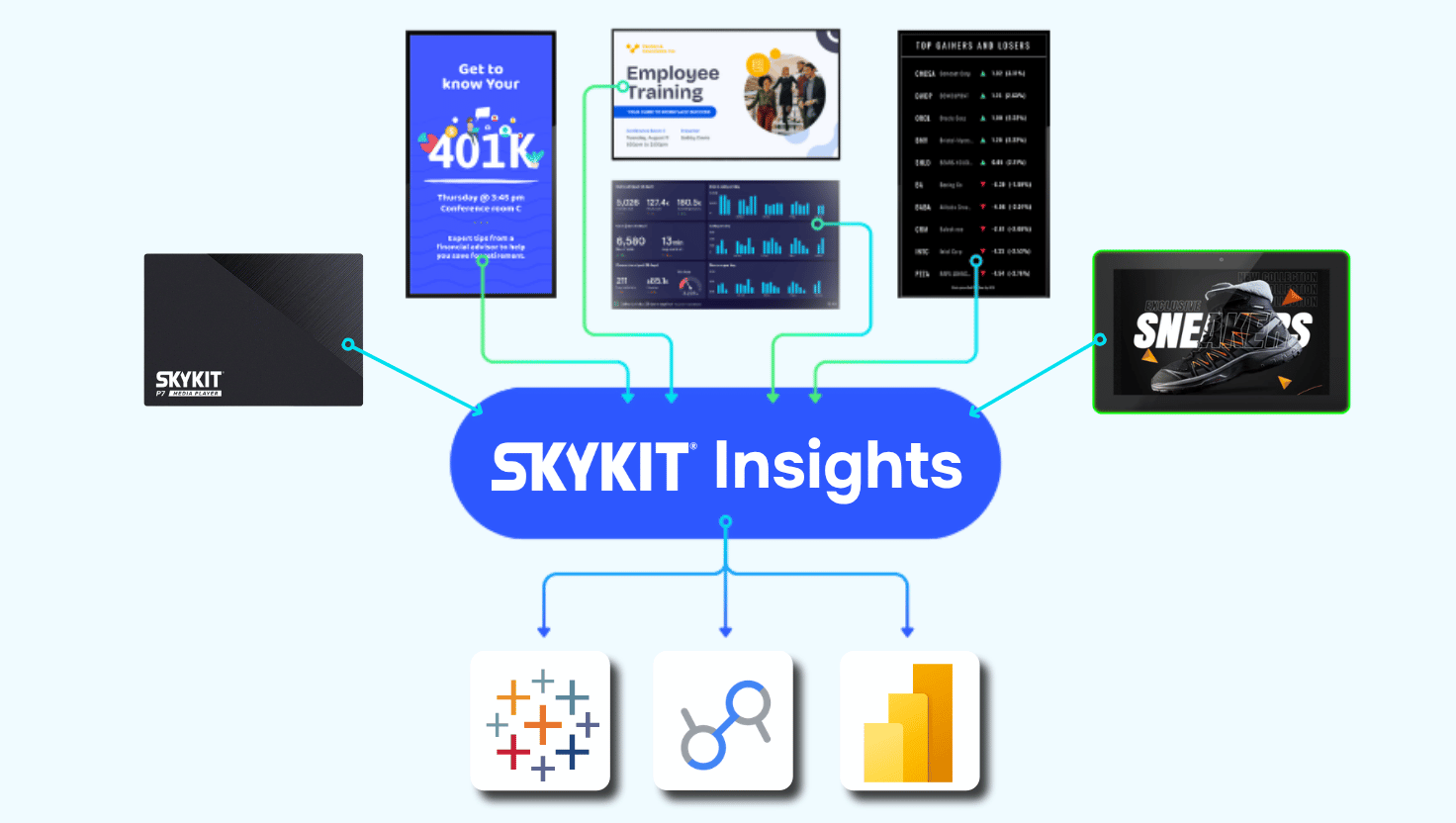
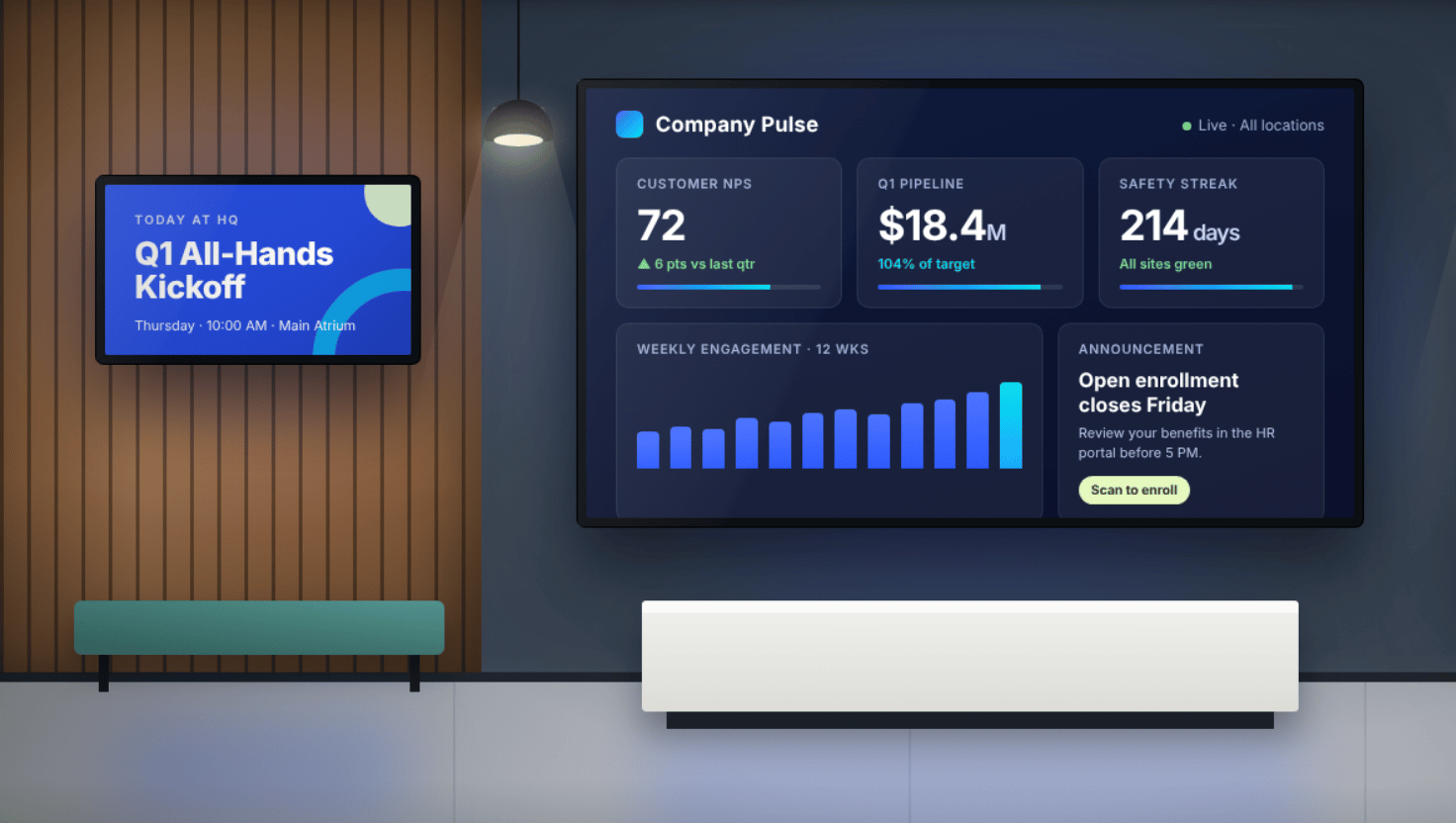
The fastest-growing technical request we saw in 2025 was secure data integration. Customers want live business data on screens: production dashboards on factory floors, CRM metrics in sales offices, BI visualizations in operations centers.
That means enterprise authentication, complex rendering on headless devices, and treating screens as active endpoints in the data workflow. Customers expect plug-and-play connections to their existing tools – Salesforce, Power BI, Tableau, and data lakes – with SSO and MFA authentication handled seamlessly.
The impact is measurable: 80% of manufacturers utilize digital signage as an effective tool to enhance employee training and improve productivity, while using digital signage in the workplace can increase engagement by 22%. These improvements come from giving workers access to live operational data exactly when and where they need it.
What We Learned: The most valuable screens aren’t just communicating – they’re operationalizing data. When live business intelligence reaches the factory floor or sales office in real time, it changes behavior and drives measurable outcomes.
5. Enterprise Buyers Adopted Structured Deployment Methodologies
The biggest shift we saw in 2025 was how enterprise buyers approached us. They stopped comparing feature checklists and started asking harder questions: What’s the payback period? How do we measure success? Can you show me a customer at our scale?
We responded by moving to a structured approach: proof of concept, pilot with defined success metrics, then scale. Yes, sales cycles got longer – but outcomes got dramatically better.
This methodology aligns with broader adoption trends. According to recent data, over 60% of businesses without digital signage plan to incorporate it within the next two years, while 67% of existing users intend to increase deployment.
What We Learned: Enterprises want partners who’ve proven they can deliver at scale, with clear success metrics and accountability built in from day one.
Looking Ahead to 2026
As we head into 2026, we’re more excited than ever about what’s next. The trends we saw in 2025 – ROI-driven buying, full-stack platform demand, security-first thinking, data convergence, and structured deployment models – aren’t slowing down. They’re accelerating.
The opportunity ahead is clear: digital signage is no longer a standalone technology. It’s converging with enterprise infrastructure, and the winners will be the platforms that treat screens as intelligent, secure, integrated endpoints – not isolated displays.
We can’t wait to see what 2026 brings. Join us next month for our webinar, where we’ll dive deeper into the opportunities, challenges, and strategies that will define the year ahead.










.svg)


