.svg)

{{cta}}
It's late on a Friday, and someone on a corporate marketing team needs an updated safety notice, a new product graphic, and a revised hours banner live on every screen — at every location — by Monday. So they log into the digital signage system. Then log in again. And again...one tenant at a time, and the bigger the footprint, the more times over. Somewhere around location 23, a typo slips in. By location 40, an interruption causes them to skip a few.
Sound familiar? It's not an edge case. It's the default state of multi-location content management at most enterprises right now. And it's the real reason "brand consistency" initiatives quietly stall out. Not because anyone stopped caring about the corporate message. Because keeping every location current still means dozens of manual, error-prone steps. Every single time.
So what does fragmented communication actually cost you?
Time, for one. Every hour spent re-uploading the same asset to a dozen systems is an hour not spent on the message itself. And trust, for another — every location running an old promotion, an outdated notice, or last quarter's numbers still on screen, chips away at the one thing brand consistency was supposed to protect.
There's an upside worth naming too: brand management professionals surveyed in Marq's State of Brand Consistency Report estimated that consistent branding could lift a company’s revenue by 10–20%. That's a hard number to ignore next to a marketing budget. And it's exactly what's on the line every time the manual process breaks down.
This isn't unique to any one industry — it just shows up differently depending on where you sit.
- If you're running digital signage across multiple plants, it's not just about how things look. It's also about whether the right person got the right information at the right moment: safety updates, downtime alerts, production targets.
- In retail, it's whether every store is running the current promotion instead of last month's pricing.
- In hospitality, it's whether every property is showing the same guest policy instead of whatever a manager remembered to update. Different stakes, same root problem: when updates don't reach every location at the same time, that's not just inconsistent — in some cases, it's genuinely risky.
So here's the part that should genuinely worry any comms or ops leader running more than one site: without a shared system, every location develops its own habits over time. One plant's safety board gets updated every week; another hasn't been touched in months. One store manager posts every promotion the day it launches; another gets to it whenever. Same company, same program, meaningfully different execution. Not because any one team is careless. Because nothing is forcing consistency between them. That's a real liability hiding inside "we'll just let each site handle it."
What balancing global brand with local voice actually looks like
Zoom out for a second. This same problem shows up anywhere a company runs more than one location. My instinct (and maybe yours) is to fix it by centralizing everything: corporate approves and owns every screen, at every location, for every update.
But let’s push back. Do that, and local teams lose the ability to post anything on their own — a shift shoutout, this week's numbers, a manager's note, a local promotion — without routing it through corporate first. Lose that local relevance, and local teams find another way to say what they need to say, by posting around the system instead of through it. It’s the same fragmentation the shared system was supposed to solve, just showing up on the local side instead of corporate's.
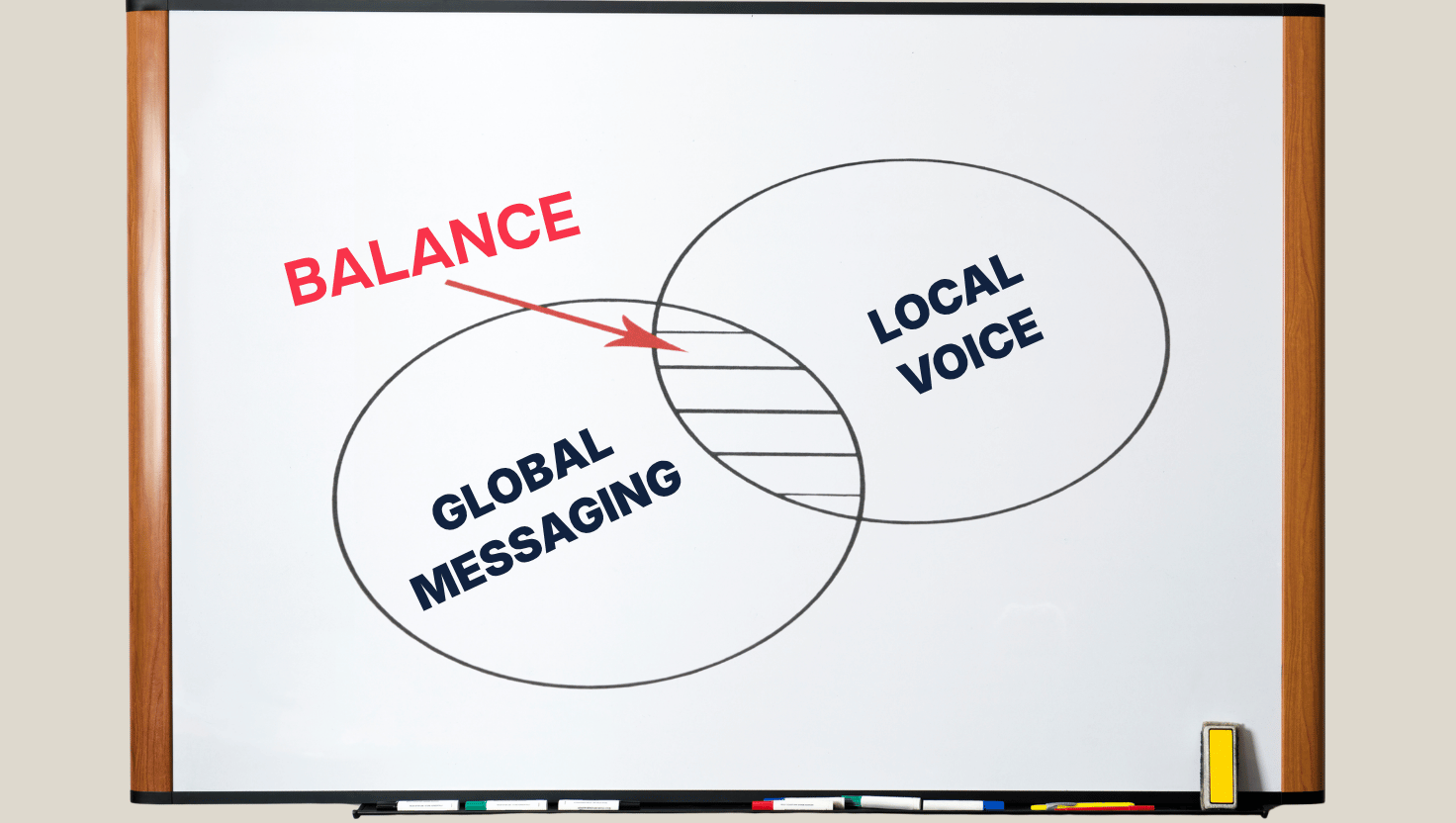
The pattern I keep coming back to has a name on our team: the "glocal" framework — short for "global + local." It's not a compromise between the two. It's running both, fully, at the same time:
🔒 Corporate owns what shouldn't change, no matter which site you're looking at: safety standards, brand assets, company-wide announcements. Update it once, and it's live everywhere — no separate login for each site.
🎯 Local teams own what's theirs to decide: a shift shoutout, facility-specific reporting, a local promotion. They post it themselves, and it can't touch the corporate message by accident.
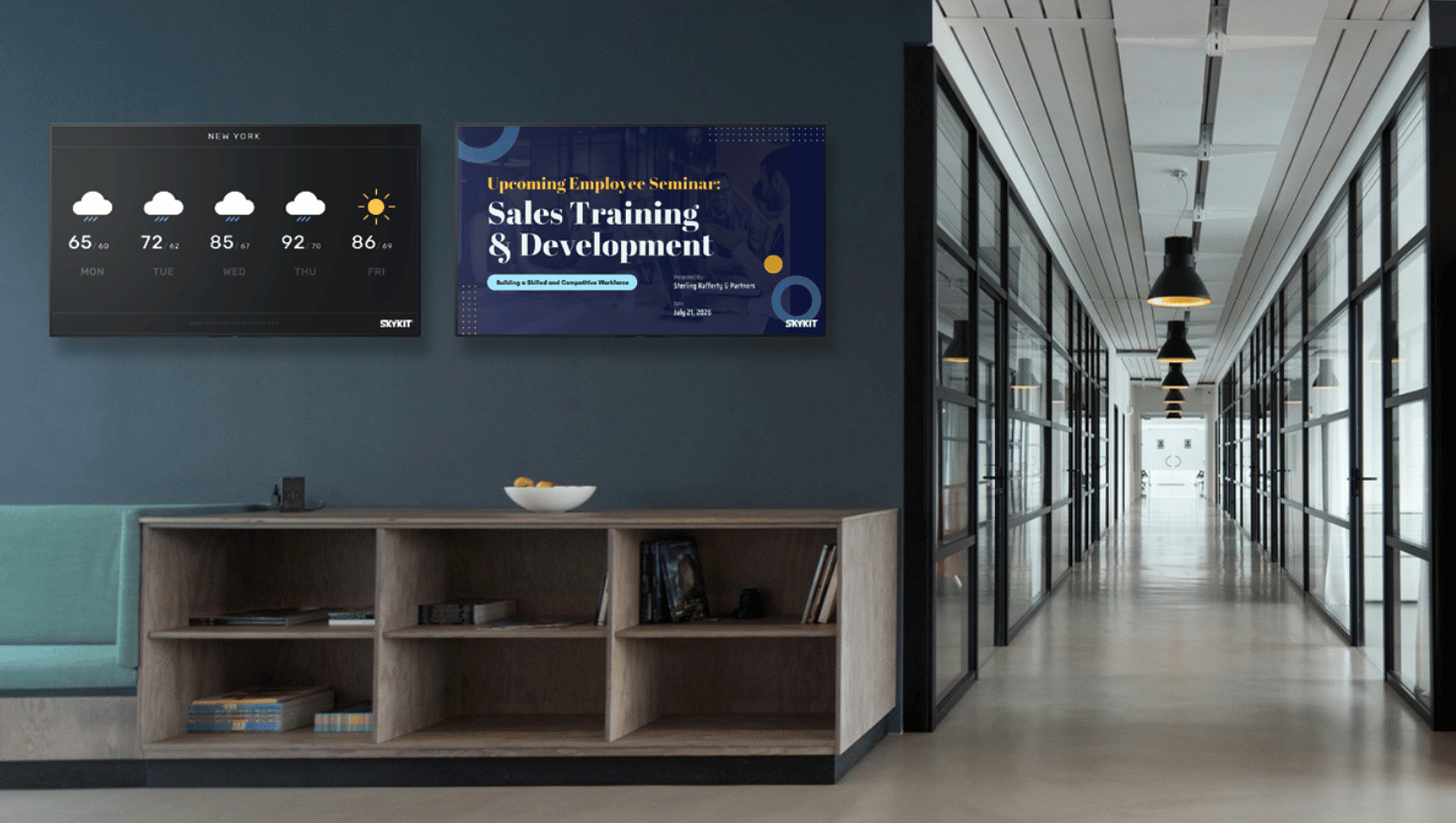
🤝 Nobody has to choose between the two. The same screen carries a non-negotiable safety alert right next to today's local update. And each one stays exactly where it belongs.
That, to me, is the actual definition of balancing global brand with local voice. Not corporate giving something up. Not local teams losing their say. Two systems, each fully in control of its own lane, at the same time, on the same screen.
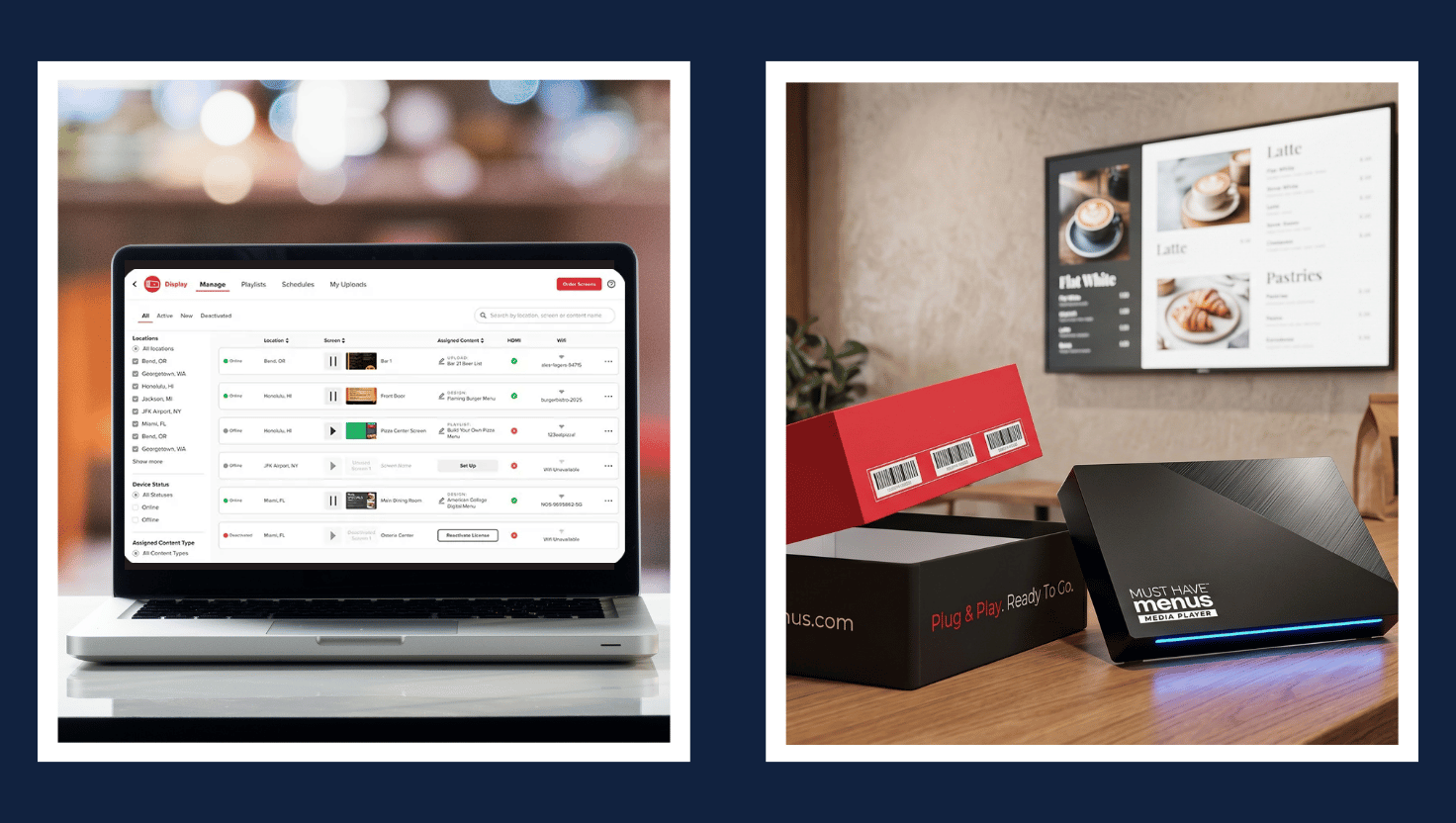
This is exactly the kind of problem Skykit's digital signage platform was built to solve.
If you're not sure whether your organization has this problem, (in my experience) that uncertainty is usually the first sign you do. Happy to walk through what this looks like for your organization. Reach out and let's talk it through.
A consistent message and a local voice were never supposed to be opposites — and with the right system, they don't have to be.
{{divider}}
👀 Want to see this in action?
We're breaking it down live on October 2nd in The Hidden Costs of Multi-Site Communications. SAVE YOUR SEAT→
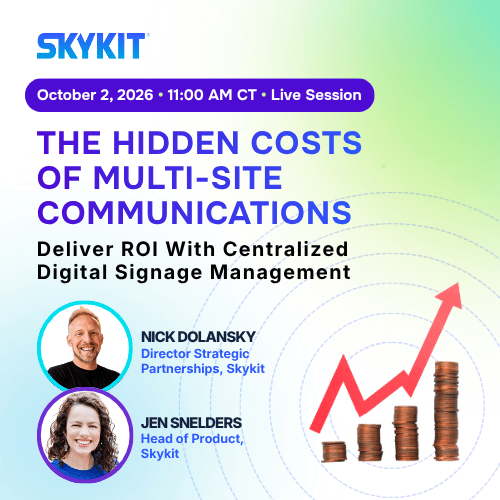
Join Skykit Live: The Hidden Costs of Multi-Site Comms
In this 45-minute session we'll discuss the challenges of fragmented, manual communication. Explore how centralized digital signage management eliminates wasted hours and turns into measurable ROI.
Join Skykit's Jen Snelders and Nick Dolansky live on October 2nd at 11:00 AM CT.









.svg)


