.svg)
Industry: Restaurant Technology / Vertical SaaS
Use Case: Enterprise Content Integration, White-Label Digital Signage, Digital Menu Boards
Challenge: MustHaveMenus (MHM) needed to add digital menu board displays to their restaurant marketing platform. But building the hardware, firmware + device management infrastructure from scratch would take years and significant capital.
Solution: MHM layered Skykit's Enterprise Content Integration directly into their existing platform, launching a fully white-labeled digital display offering without becoming a hardware company.
Result: Adding a native digital menu board SKU accelerated time to market, and delivered a seamlessly branded display experience to restaurants across the country.
"Skykit provided a solid product, excellent customer service, and the flexibility we needed to deliver an innovative digital menu board solution."

MustHaveMenus
MustHaveMenus (MHM) is a restaurant marketing platform trusted by tens of thousands of restaurants, bars, and food service businesses across the country. Founded on the idea that every restaurant deserves professional-grade marketing tools, MustHaveMenus gives operators everything they need to design, update, and distribute menus.
Their platform is built for the realities of the restaurant industry: easy to use, fast to update, and flexible enough to work for a single-location café or a multi-unit franchise chain. MustHaveMenus offers over 25,000 templates, direct POS integrations with Toast and Square, and a full suite of scheduling and content management tools — all designed to help restaurants look great and operate efficiently.
Adding Displays Meant Building and Entirely New Business
As digital menu boards became standard in the restaurant industry, MustHaveMenus recognized a clear opportunity: their customers were already designing menus in the platform — they just needed a way to get those menus onto screens. Adding a native display capability would extend the value of the platform and deepen their position as a one-stop restaurant marketing solution.
The obstacle wasn't product vision. It was infrastructure.
Building a reliable digital display offering from scratch — developing hardware, managing device firmware, building remote monitoring and control, and architecting the security layer — represented 12 to 24 months of R&D, significant capital, and ongoing operational complexity. MustHaveMenus needed a path to market that didn't require becoming a hardware company.
Display Infrastructure Without the Build
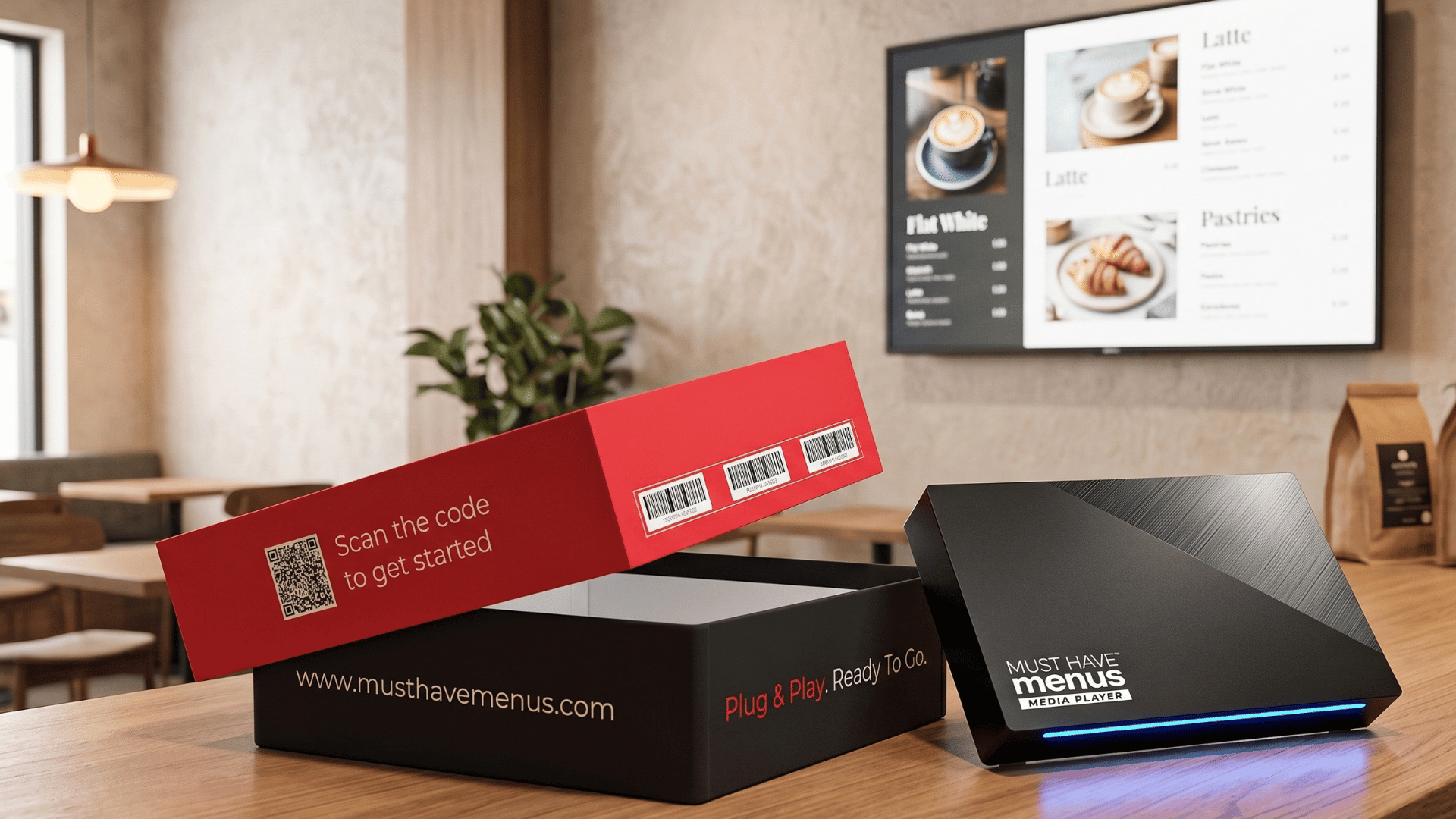
MustHaveMenus layered Skykit's Enterprise Content Integration (ECI) directly into their existing platform, giving them the full display infrastructure stack without a single line of custom firmware.
Using Skykit's Content Webhook, MHM connected their menu design and scheduling tools to the display layer, allowing restaurant operators to push content directly from the platform they already used. Skykit's Control API gave MHM the ability to embed device management into their own product interface — so their customers could reboot screens, push updates, and monitor device health without ever knowing Skykit was running underneath.
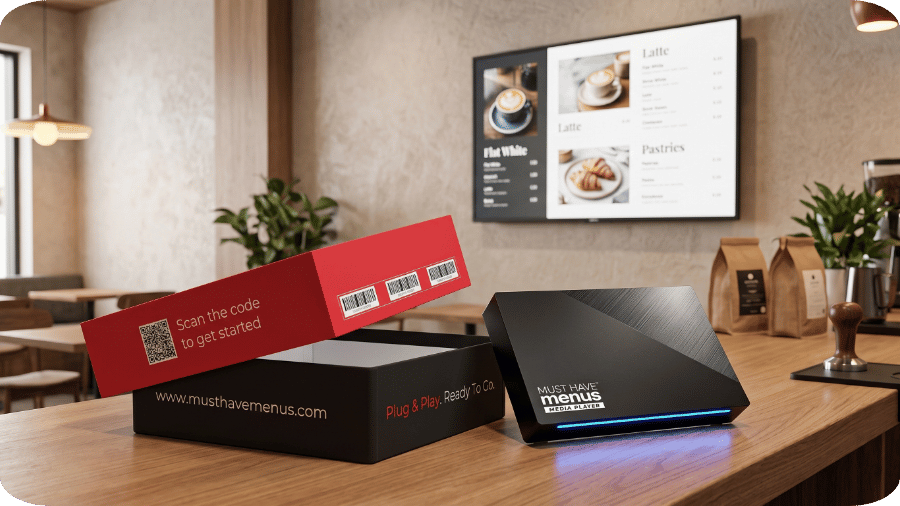
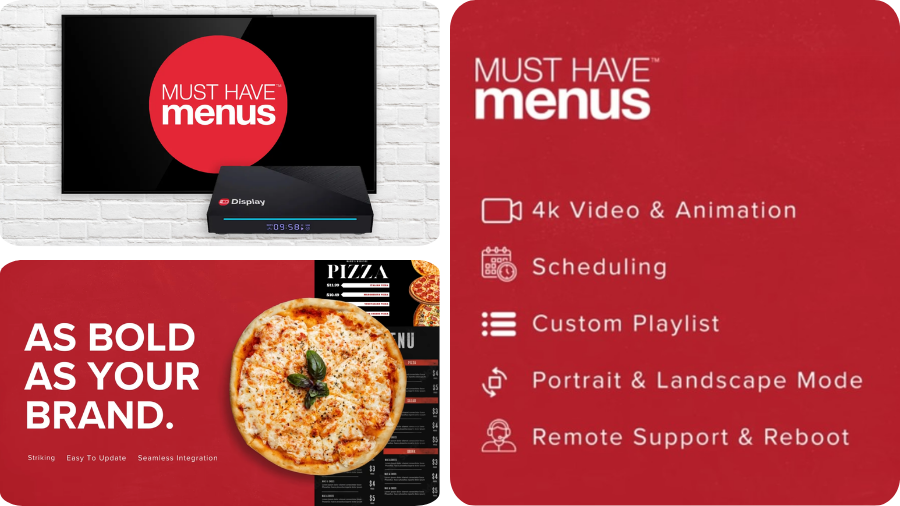
The result was a fully white-labeled experience. MustHaveMenus customers see MHM branding at every touchpoint — from the media player boot screen to the app interface. Skykit remains entirely invisible, handling device verification, edge caching, remote management, and SOC 2 Type 2-backed security behind the scenes.
A New Revenue Line. No New Infrastructure Team.
By building on Skykit's ECI foundation, MustHaveMenus launched a native digital display SKU in a fraction of the time and investment a ground-up build would have required. Key outcomes include:
→ Faster time to market. MHM added digital display as a core product offering and began onboarding restaurant customers without the delays of a full in-house hardware development cycle.
→ Frictionless workflow for restaurant operators. Customers design, update, and schedule menu board content entirely within the MustHaveMenus platform — no new software to learn, no separate CMS to manage.
→ Scalable architecture for any size operation. Whether a customer runs a single location or a multi-unit franchise, the integration scales without new engineering work for each customer onboarded.
→ Enterprise-grade security, out of the box. SSO, MFA, and SOC 2 Type 2 compliance — all included in the platform infrastructure MHM built on.









.svg)


